5 Google Algorithm Updates That Changed How We Rank In SERP
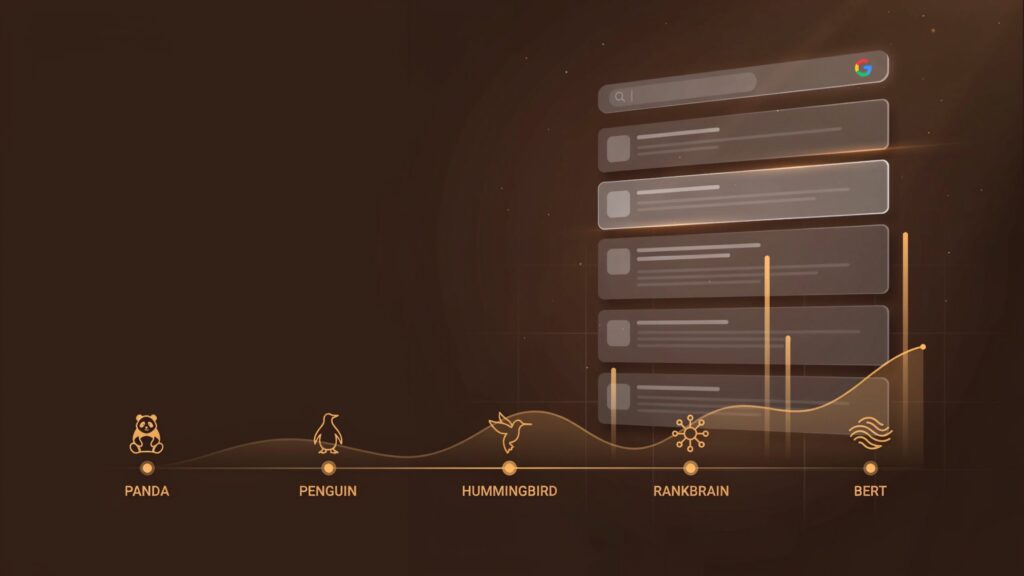
Google updates its algorithm regularly, and each update can change the how websites performs in search engine result page. Some updates make an immediate impact, rankings drop, traffic changes overnight, and website owners start searching for answers. Others are much quieter, gradually changing the way Google understands and ranks content, with their effects becoming clear only over time.
This post is about the 5 Google algorithm updates that changed how rank in SERP(Search engine result page). They may not be as famous as Panda or Penguin, but:
- Caffeine
- Florida
- Vince
- Pigeon
- Big Daddy
played a huge role in shaping how Google search works today. Now let’s look at each one of the them:
1. Caffeine (2010) — The Update That Made Google Fast Enough to Matter
The Caffeine Update introduced a faster way for Google to discover and store web pages. This allowed new content to appear in search results more quickly, helping users find the latest and most relevant information.
What Was Caffeine?
The Caffeine Update introduced a faster way for Google to discover and store web pages. This allowed new content to appear in search results more quickly, helping users find the latest and most relevant information.
Key Changes:
- Google indexed new content much faster.
- New websites appeared in search results more quickly.
- Search results became fresher and more up to date.
Why It Mattered:
Caffeine didn’t directly change rankings, but it gave an advantage to websites that published fresh content regularly. New and updated pages could appear in search results much faster.
Lesson Learned: Consistent content updates help your website stay visible. A regularly updated site has a better chance of being discovered than one that stays inactive for long periods.
2. Florida (2003) — Google’s First Major Crackdown on SEO Tricks
The Florida Update was one of Google’s first major algorithm changes. Released in 2003, it caused major ranking drops for many websites and marked the beginning of Google’s fight against spammy SEO tactics.
What was Florida?
Launched on November 16, 2003, the Florida Update targeted websites that relied on keyword stuffing, hidden text, and other tricks to rank higher in search results. It was Google’s first large, scale effort to reward quality content over manipulation, changing the way SEO was done forever.
Key Changes:
- Keyword stuffing became ineffective and could even hurt rankings.
- Hidden text and doorway pages were penalised.
- Google became better at spotting unnatural link-building tactics.
Why It Mattered:
Google wanted to reduce spam and improve search quality. The Florida Update targeted websites that were trying to manipulate rankings instead of providing useful content for users.
Lesson Learned: Focus on creating value for users, not just trying to game the algorithm. If a tactic exists only to manipulate rankings, it’s unlikely to work for long.
3. Vince (2009) — When Brand Authority Started to Matter More
Have you noticed that well-known brands often rank higher for broad search terms? The Vince Update played a big role in that shift. Released in 2009, it helped Google give more importance to trusted and established brands in search results.
What was Vincent?
Launched in 2009, the Vince Update gave more visibility to trusted and well, established brands, especially for competitive search terms. As a result, many big brand websites started ranking above smaller sites, even when those smaller sites had strong SEO efforts.
Key Changes:
- Well-known brands gained an advantage in competitive search results.
- Smaller and affiliate websites lost visibility for broad keywords.
- Trust and authority became more important ranking factors.
Why It Mattered:
Google wanted users to find trustworthy results faster. The Vince Update helped established and reliable websites rank higher for competitive searches.
Lesson Learned: nstead of competing with big brands for broad keywords, focus on building expertise in a specific niche and targeting long-tail keywords where you can stand out.
4. Pigeon (2014) — The Update That Connected Local Search to the Real Algorithm
Before 2014, local SEO and traditional SEO worked quite differently. The Pigeon Update changed that by bringing local search results closer to Google’s main search algorithm, making local rankings more accurate and relevant.
What was Pigeon?
Launched in 2014, the Pigeon Update connected local search more closely with Google’s main ranking system. Before Pigeon, businesses could rank well mainly because of their location and business listings. After the update, website quality and traditional SEO factors became much more important for local rankings.
Key Changes:
- Local search became more aligned with Google’s main search results.
- Website quality, backlinks, and SEO gained more influence on local rankings. T
- he local results display was reduced from 7 listings to 3.
Why It Mattered:
Google wanted local rankings to reflect business quality, not just location. The Pigeon Update made strong websites and good SEO more important in local search.
Lesson Learned: A Google Business Profile helps you get noticed, but a quality website and strong SEO are what help you stay visible in local search results.
5. Big Daddy (2005–2006) — The Infrastructure Overhaul Nobody Saw Coming
Big Daddy may not be as well known as Panda or Penguin, but it was one of Google’s most important technical updates. Working behind the scenes, it improved how Google handled and processed website data.
What was Big Daddy?
Rolled out between 2005 and 2006, Big Daddy was a major upgrade to Google’s crawling and indexing system. Instead of changing rankings directly, it improved how Google discovered, processed, and stored website pages across the web.
Key Changes:
- mproved how Google identified the correct version of a webpage.
- Better detection and handling of duplicate content.
- Smarter processing of redirects and spammy redirect tactics.
Why It Mattered:
Google wanted websites to be easier for its crawlers to understand. Big Daddy improved the handling of URLs, duplicate pages, and redirects to make indexing more efficient.
Lesson Learned:Great content alone isn’t enough. If your website has technical issues that make it difficult for Google to crawl and understand, your pages may struggle to rank or even get indexed.
Conclusion: What These Updates Teach Us
Although these updates were released at different times, they all shared a common goal: helping Google deliver more trustworthy, relevant, and high-quality search results.
| Update | Main Focus | Key Lesson |
| Florida (2003) | Fighting SEO spam | Focus on users, not shortcuts. |
| Big Daddy (2005–2006) | Technical SEO | A clean website structure matters. |
| Vince (2009) | Trust & authority | Build credibility in your niche. |
| Caffeine (2010) | Faster indexing | Fresh, regular content has an advantage. |
| Pigeon (2014) | Local SEO | Strong websites support strong local rankings. |
Frequently Asked Questions
1. What was the purpose of the Caffeine Update?
To help Google find and index new content much faster, making search results fresher.
2. Did Caffeine change rankings directly?
No. It improved indexing speed, not ranking factors.
3. Why was the Florida Update important?
It was Google’s first major crackdown on spammy SEO tactics like keyword stuffing.
4. What tactics did Florida target?
Keyword stuffing, hidden text, doorway pages, and other manipulative SEO practices.
5. What did the Vince Update do?
It gave more visibility to trusted and well-known brands for competitive keywords.
6. Is Vince still relevant today?
Yes. It highlighted the importance of trust, authority, and brand reputation in SEO.
7. What was the goal of the Pigeon Update?
To improve local search by connecting it more closely with Google’s main ranking system.
8. How did Pigeon affect local results?
It made website quality and SEO more important for local rankings and helped shape today’s 3-pack results.
9. Was Big Daddy a content or technical update?
A technical update focused on crawling, indexing, URLs, and redirects.
10. Why did some sites lose visibility after Big Daddy?
Because technical issues like duplicate content, poor URL structures, and redirect problems made them harder for Google to understand and index.
Conclusion:
What This Means for SEO in 2026
The lessons from these updates are still relevant today:
- Keep your website technically sound. Clean URLs, proper redirects, and good site structure help search engines understand your content.
- Focus on users, not algorithms. Shortcuts and spammy tactics rarely work in the long run.
- Build trust and authority. Strong expertise, credibility, and a good reputation matter more than ever.
- Invest in your website, not just local listings. A Google Business Profile helps, but your website still plays a major role in rankings.
- Publish valuable content consistently. Fresh content is important, but quality should always come before quantity.
SEO in 2026 is still about the same fundamentals Google has been rewarding for years—quality content, trust, and a strong technical foundation.
Do checkout https://shaheendigi.com/ for more blogs like this.